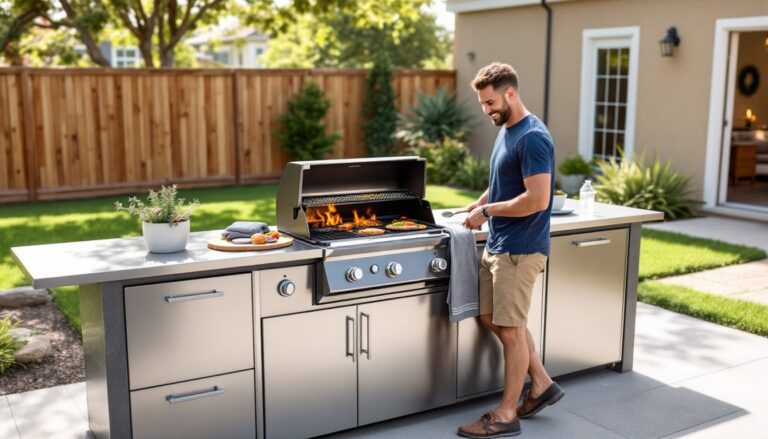
Adding an outdoor griddle transforms a backyard into a year-round cooking space. Whether flipping pancakes for a crowd or searing steaks at high heat, a griddle offers versatility most grills can’t match. Unlike traditional grills with grates, griddles provide a flat, even cooking surface that handles everything from eggs to fajitas without losing small ingredients between the bars. For homeowners planning an outdoor kitchen or upgrading an existing setup, understanding the options, installation requirements, and ongoing care makes the difference between a showpiece and a workhorse.
Table of Contents
ToggleKey Takeaways
- An outdoor kitchen griddle provides a flat, even cooking surface that handles everything from breakfast items to steaks, eliminating the issue of small ingredients falling through grill grates.
- Outdoor griddles come in two main types—built-in models that integrate into permanent kitchen islands and freestanding units on carts, with prices ranging from $300 to $3,000 depending on size and materials.
- A 36-inch outdoor griddle can cook two dozen slider patties or 18 eggs simultaneously, making it ideal for entertaining and significantly reducing cook time compared to stovetop cooking.
- Heat control is superior on gas griddles with multiple independently controlled burner zones, allowing one section to maintain 300°F for warming while another reaches 500°F for searing.
- Proper maintenance of your outdoor griddle takes just 10 minutes per session—scrape warm surfaces, wipe with a damp cloth, and apply cooking oil—to prevent rust and maintain the nonstick patina that develops over time.
- Choose between cold-rolled steel (excellent seasoning, requires regular oiling) or stainless steel tops (corrosion-resistant, more expensive), and verify the griddle has a rear-mounted grease trough for easy drainage.
What Is an Outdoor Kitchen Griddle?
An outdoor kitchen griddle is a flat, heated metal cooking surface designed for exterior use. Most feature a thick steel or stainless steel top ranging from ¼-inch to ½-inch thick, which distributes heat evenly across the surface.
These units run on propane, natural gas, or electricity. Gas models connect to standard LP tanks or a home’s natural gas line, while electric versions require a dedicated 240V circuit similar to an electric range. The cooking surface typically measures 28 to 36 inches wide for residential models, though commercial-sized units stretch to 60 inches or more.
Unlike a conventional grill, griddles lack grates. The solid surface prevents flare-ups from dripping fat and allows finer control over browning. Grease management systems, usually a rear-mounted trough and collection cup, channel runoff away from the cooking zone. Many outdoor griddles also include adjustable heat zones, letting cooks maintain different temperatures across the surface for simultaneous prep of proteins and vegetables.
Why Add a Griddle to Your Outdoor Kitchen?
Griddles expand the menu beyond burgers and hot dogs. The flat surface excels at breakfast items, pancakes, hash browns, and bacon cook evenly without falling through grates. Stir-fries, smash burgers, quesadillas, and seafood all benefit from direct contact with a hot, seasoned steel surface.
Heat control is another advantage. Gas griddles often feature multiple burner zones with independent controls, allowing one section to hold at 300°F for warming tortillas while another hits 500°F for searing. Electric models provide precise digital thermostats, though they typically heat more slowly than gas.
Cooking for groups becomes simpler. A 36-inch griddle can handle two dozen slider patties or 18 eggs simultaneously, cutting cook time significantly compared to stovetop pans. The open layout also lets multiple people work side-by-side without crowding.
Cleaning beats dealing with grill grates. After cooking, scrape the surface with a metal spatula, wipe with a damp cloth, and apply a thin layer of oil. No soaking, wire brushing, or wrestling with crusty grates. Outdoor griddles develop a nonstick patina over time, similar to cast iron, which improves performance and simplifies cleanup.
Types of Outdoor Kitchen Griddles
Outdoor griddles fall into two main categories, each suited to different spaces and budgets.
Built-In vs. Freestanding Griddles
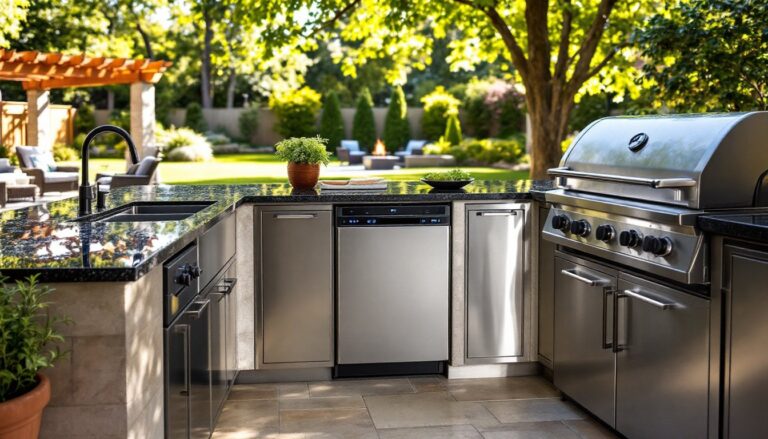
Built-in griddles integrate into a permanent outdoor kitchen island or countertop. These units require a cutout in the counter, similar to installing a drop-in cooktop indoors. Most measure 30 to 36 inches wide and sit flush with the surrounding surface. Built-ins connect to a fixed gas line or dedicated electrical circuit, eliminating the need for propane tank swaps.
Installation demands careful planning. The griddle needs a non-combustible base, typically a steel frame with cement board or stone countertop, and clearances specified by the manufacturer (often 6 inches minimum from combustible materials). Gas connections must meet local codes and may require a licensed plumber. Budget $800 to $3,000 for the griddle unit alone, plus installation labor and materials.
Freestanding griddles sit on a cart with casters or fixed legs. These plug-and-play units connect to a standard propane tank or outdoor-rated extension cord for electric models. Prices range from $300 for basic 28-inch models to $1,500 for stainless steel versions with cabinets and side shelves.
Freestanding models offer flexibility. Homeowners can roll them out for weekend cookouts and store them under a cover or in a garage during off-seasons. They’re also renter-friendly and move easily if the homeowner relocates. The tradeoff: carts take up floor space and lack the streamlined look of a built-in.
Hybrid options exist. Some manufacturers sell griddle tops designed to drop into existing grill islands, converting unused burner space into a flat-top cooking zone. These fit standard 14- to 20-inch cutouts and work well for homeowners who want both grilling and griddle capabilities without rebuilding their entire setup.
Choosing the Right Griddle for Your Space
Start with fuel availability. If the outdoor kitchen already has a natural gas line for a grill, adding a gas griddle simplifies the install. Propane works anywhere but requires tank storage and periodic refills. Electric griddles need a GFCI-protected outlet rated for outdoor use, check with an electrician before committing, as retrofitting power outdoors can cost $500 to $1,200.
Size depends on typical cook load. A 28- to 30-inch griddle handles meals for four to six people comfortably. Families who entertain regularly or cook breakfast for a crowd should consider 36 inches or wider. Measure the available counter or patio space, accounting for side clearances (usually 6 inches on combustible surfaces) and ventilation requirements.
Material quality affects both performance and longevity. Cold-rolled steel tops retain heat well and develop excellent seasoning, but they require regular oiling to prevent rust. Stainless steel resists corrosion without seasoning but costs more and may heat less evenly. Look for at least ⅜-inch thickness: thinner tops warp under high heat.
BTU ratings indicate heat output on gas models. A 36-inch griddle typically needs 54,000 to 60,000 BTUs split across three or four burners for even heating. Electric models range from 3,000 to 5,000 watts total, which translates to slower preheat times but stable, even temperatures once warmed.
Check the grease management system. Quality griddles include a rear-mounted grease trough that slopes toward a removable drip cup. Avoid models with front-mounted trays, grease splatter increases, and the tray blocks access. Some higher-end units feature a built-in grease drawer that slides out for easy emptying.
Consider BTU control granularity. Four independently controlled burner zones offer more cooking flexibility than two. Digital thermostats on electric griddles eliminate guesswork but add complexity and potential failure points.
Installation and Setup Tips
For built-in installations, confirm the countertop can support the griddle’s weight, most units weigh 80 to 150 pounds. The cutout must match manufacturer specs precisely: even a ½-inch error causes fit problems. Use a jigsaw with a metal-cutting blade for stainless countertops or a diamond blade on a circular saw for stone.
Gas connections require black iron pipe or approved flexible connectors rated for outdoor use. Run the line to the griddle location, install a manual shutoff valve within 24 inches of the unit, and test all joints with soapy water for leaks before operation. Most jurisdictions require a permit and inspection for new gas line work, check with the local building department.
Electric griddles need a dedicated circuit. A 240V/30A circuit handles most residential models, but verify the unit’s electrical requirements. Outdoor receptacles must have weatherproof covers and GFCI protection per NEC Article 210.8. Hire a licensed electrician for this work unless experienced with outdoor wiring.
Freestanding setup is simpler but still needs attention. Place the griddle on a level, non-combustible surface, a concrete patio or pavers work well. Avoid wood decks unless the manufacturer explicitly allows it and clearances are met. For propane models, secure the tank in the cart’s designated holder and use a quality regulator rated for the griddle’s BTU output.
Before first use, season the cooking surface. Heat the griddle to medium-high, apply a thin coat of high-smoke-point oil (flaxseed, grapeseed, or canola), and let it smoke off. Repeat three to five times until the surface darkens to a bronze or black patina. This polymerized layer prevents rust and creates a nonstick finish.
Ventilation matters, especially for built-ins under a pergola or covered patio. While griddles produce less smoke than charcoal grills, they still generate steam and aerosolized grease. Ensure adequate airflow, either open sides or a vent hood rated for outdoor use.
Maintaining Your Outdoor Griddle
After each cook, scrape the surface while still warm using a metal spatula or griddle scraper. This removes stuck-on food bits before they carbonize. Wipe with a damp cloth or paper towels, then apply a thin layer of cooking oil across the entire surface. This post-cook seasoning prevents rust and builds the nonstick patina.
For stubborn residue, use a griddle stone or scouring pad with water while the surface is warm. Avoid dish soap, it strips seasoning. If rust spots appear (common in humid climates), scrub with a mild abrasive, re-season the affected area, and increase oiling frequency.
Deep cleaning every few months keeps performance sharp. Heat the griddle to high, add water to steam-clean stuck debris, scrape thoroughly, and wipe dry. For stainless steel tops, a specialized stainless cleaner restores shine, though it’s optional for function.
Inspect the grease management system weekly during heavy use. Empty and wash the drip cup or tray with hot, soapy water. Check that the grease trough slopes correctly: buildup can cause grease to pool on the cooking surface.
Gas griddles need annual burner inspection. Remove the cooking surface and check burner tubes for rust, insect nests, or clogs. Clean with a wire brush and compressed air. Test igniters and replace batteries if applicable. Verify all gas connections remain tight and leak-free.
Electric models require less maintenance but benefit from periodic element checks. Look for corrosion on heating elements and ensure electrical connections stay dry and secure. Many outdoor spaces inspire creative cooking setups, and Country Living regularly features ideas that combine rustic charm with functional outdoor kitchens. For those integrating griddles into comprehensive outdoor designs, Better Homes & Gardens offers seasonal planning guides that pair hardscaping with cooking appliances.
Winter storage extends griddle life in freezing climates. For freestanding units, drain all water from grease systems, coat the surface heavily with oil, and cover with a breathable, waterproof cover. Built-ins can stay in place if properly winterized, apply a thick oil coat and cover the surface. Avoid plastic tarps that trap moisture: use canvas or purpose-made grill covers.
Regular maintenance takes 10 minutes per cook session and prevents costly repairs. A well-kept griddle lasts 10 to 15 years or longer, making it a solid investment for homeowners who cook outdoors frequently. For those considering modular outdoor setups, an outdoor kitchen unit on wheels offers flexibility similar to freestanding griddles while combining multiple cooking methods in one compact design.