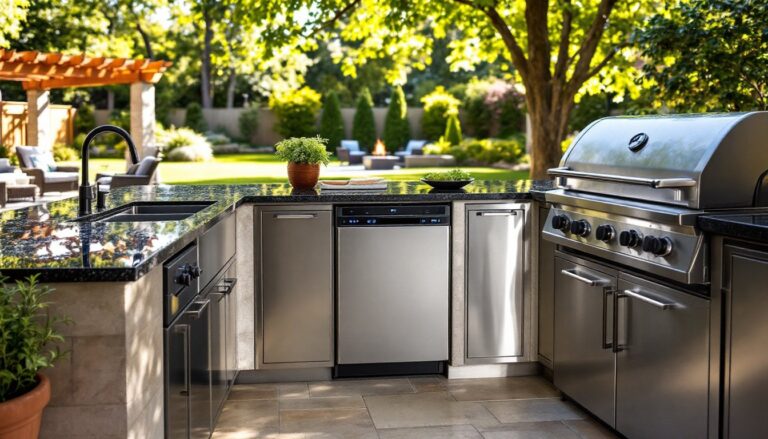
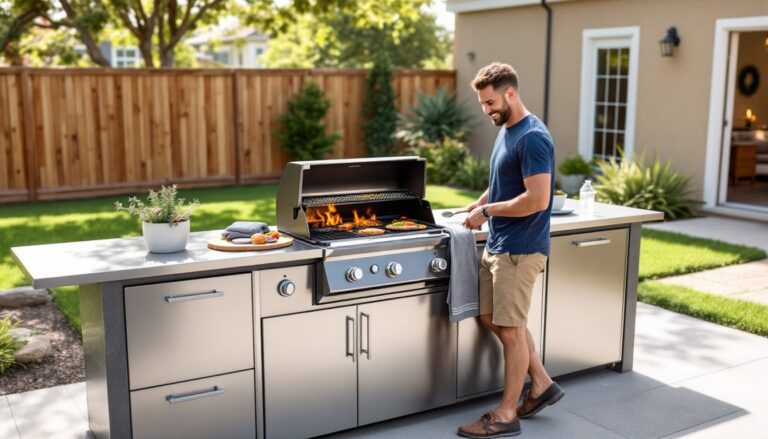
Building an outdoor kitchen with a grill transforms a basic patio into a full-fledged cooking and entertainment zone. But this isn’t a weekend project you knock out with a bag of concrete and a propane hookup. Done right, it involves planning for utilities, weather exposure, work triangle logistics, and code compliance. Done wrong, you’re stuck with a glorified grill cart and buyer’s remorse. This guide walks through layout planning, grill selection, component integration, material choices, and when to call in pros versus handling it yourself.
Table of Contents
ToggleKey Takeaways
- An outdoor kitchen with a grill requires careful planning for utilities, codes, and layout before construction—sketch your design to scale and verify local building permits early to avoid costly mistakes.
- Position your grill at least 10 feet from the house, keep the work triangle (grill, prep surface, and sink) under 9 feet total, and ensure at least 24 inches of countertop space on either side for landing area.
- Invest $1,500–$4,000 in a quality built-in grill with 304 stainless steel or marine-grade construction; avoid cheap units under $1,000 that warp or corrode within 5 years.
- Essential components like an outdoor sink, refrigeration, stainless steel storage, and task lighting transform a grill into a fully functional cooking space and justify the investment.
- Choose durable countertop materials like granite, concrete, or porcelain tile that resist UV damage and weather exposure; avoid laminate, marble, and untreated wood.
- Hire licensed professionals for gas line, electrical, and plumbing work to ensure code compliance and protect your insurance; handle masonry, framing, and finishing work yourself to reduce labor costs.
Why Add an Outdoor Kitchen with Grill to Your Home
An outdoor kitchen extends living space without adding square footage to the home’s footprint. It keeps heat, smoke, and cooking mess outside during warm months, which matters when grilling for a crowd.
Return on investment varies by region and execution quality, but mid-range outdoor kitchens typically recoup 55–70% of cost at resale in markets where outdoor living is valued year-round. In northern climates with short seasons, ROI drops.
Functional benefits include:
- Reduces indoor AC load during summer cooking
- Minimizes traffic through the house during parties
- Allows multiple cooks to work simultaneously (indoor + outdoor prep)
- Creates a dedicated zone for messy tasks like seafood boils or smoking meats
Homeowners who entertain frequently or grill multiple times per week see the most practical value. If the grill comes out twice a summer, a built-in kitchen is overkill.
Planning Your Outdoor Kitchen Layout
Start with the work triangle: grill, prep surface, and sink or cooler. Keep the distance between these points under 9 feet total to minimize steps during cooking.
Utility access dictates placement more than aesthetics. Natural gas lines, water supply, and electrical circuits need to reach the site. Running a gas line 50+ feet from the meter adds hundreds in labor and materials. Budget for a licensed plumber and electrician, DIY gas work is illegal in most jurisdictions and voids homeowner’s insurance.
Placement considerations:
- Position the grill at least 10 feet from the house to meet most fire codes and prevent siding damage from heat
- Account for prevailing wind direction so smoke doesn’t blow into seating areas or neighbor’s yards
- Provide at least 24 inches of countertop on either side of the grill for landing space
- Plan for overhead clearance if installing under a pergola or roof extension, most codes require 3 feet minimum above the grill grates
Sketch the layout to scale on graph paper before breaking ground. Many homeowners underestimate the footprint: a functional island with a 36-inch grill, sink, and storage easily runs 8–10 feet long.
Check local building codes early. Permanent structures with utilities typically require permits, and inspections happen at rough-in stages before you can close walls or pour countertops.
Choosing the Right Grill for Your Outdoor Kitchen
Built-in grills differ from freestanding models. They lack side tables and back panels, designed to drop into a custom island with combustible-safe clearances.
Fuel type:
- Natural gas: Permanent connection to home gas line. Cheaper per BTU than propane, no tank swaps, but requires professional installation and limits future layout changes.
- Propane: Flexible placement, easier retrofit, but tanks need periodic refilling. Built-in models often accommodate a tank cabinet below the unit.
Size and BTU output:
A 36-inch grill (roughly 600–800 square inches of cooking surface) handles 12–16 burgers at once, adequate for most households. BTU ratings between 50,000–75,000 provide good heat across that surface. Higher BTUs don’t automatically mean better performance, heat distribution and grate material matter more.
Construction quality:
Look for 304 stainless steel construction minimum. Marine-grade 316 stainless resists salt air corrosion in coastal areas. Cast stainless or cast iron grates retain heat better than stamped steel. Welded seams outlast fastened assemblies in high-heat environments.
Features worth considering:
- Infrared burners or rotisserie kits if you sear steaks or cook whole birds regularly
- Built-in temperature gauges (though aftermarket probe thermometers are more accurate)
- Removable drip trays for easier cleaning
Budget $1,500–$4,000 for a quality built-in unit. Big-box models under $1,000 often use thin steel that warps or corrodes within 5 years when exposed to weather year-round.
Essential Components Beyond the Grill
A grill alone isn’t a kitchen. These components add function:
Sink and faucet:
A small prep sink (15–17 inches) lets you rinse vegetables, wash hands, and fill pots without going indoors. Requires both supply and drain lines. Most outdoor kitchens use PEX for supply and schedule 40 PVC for drains, with a slight slope toward a greywater drain or connection to the home’s sewer line. Install a shutoff valve inside the house to winterize in freezing climates.
Refrigeration:
Outdoor-rated refrigerators or beverage coolers withstand temperature swings and humidity better than indoor models moved outside. Drawers or under-counter units fit tighter layouts than full-size fridges. Expect to pay $800–$2,500 depending on capacity and brand.
Storage:
Stainless steel doors and drawers protect utensils, propane tanks, and dry goods from weather. Framed openings in the island structure accommodate these modular units. Avoid marine-grade plywood or MDF behind doors, it swells with moisture. Use cement board or aluminum framing.
Side burners:
Double burners rated at 25,000–30,000 BTUs total handle sauces, sides, or a pot of corn. Built into the countertop adjacent to the grill, they share the same gas or propane source. Optional but useful if you cook multi-course meals outdoors.
Lighting:
Task lighting over the grill and prep zones is essential for evening cooking. LED strips under cabinets or low-voltage path lights nearby work well. All outdoor electrical outlets must be GFCI-protected per NEC code.
Professional outdoor spaces that prioritize custom outdoor designs often integrate these elements into a cohesive island structure rather than retrofitting them piecemeal.
Materials and Countertop Options
Outdoor kitchen materials take a beating from UV, rain, freeze-thaw cycles, and temperature swings. Choose accordingly.
Island structure:
- Concrete block (CMU): Affordable, durable, accepts stucco or stone veneer finishes. Requires a 4-inch concrete slab footer below frost line in cold climates. Rebar reinforcement recommended.
- Steel studs and cement board: Lighter than block, easier to run utilities through, but requires waterproof membrane behind the finish. Frame with 20-gauge galvanized studs.
- Prefab island kits: Modular frames from manufacturers like Lynx or Bull fit standard appliances. Faster assembly but limited layout flexibility.
Countertop materials:
- Granite: Heat-resistant, durable, widely available. Seal annually to prevent staining. Expect $60–$100 per square foot installed.
- Concrete: Customizable color and edge profiles, but prone to cracking and staining without proper sealing. Requires rebar or fiber reinforcement and a skilled installer.
- Porcelain tile: Budget-friendly ($15–$40/sq ft installed), heat-proof, wide design range. Grout lines trap grime: use epoxy grout for easier cleaning.
- Stainless steel: Commercial look, heat-proof, low maintenance. Expensive ($100+/sq ft) and shows fingerprints and scratches.
Avoid:
- Laminate countertops (moisture and heat damage)
- Marble (stains easily, etches from acidic foods)
- Untreated wood (rots, warps, invites pests)
Finish surfaces with stone veneer, stacked stone, or stucco over the block or framing. These materials handle weather and add visual weight. Budget $8–$25 per square foot depending on the material. Polished outdoor installations often use natural stone cladding to match landscaping.
DIY vs. Professional Installation
A simple grill island on a concrete pad with no utilities is a reasonable DIY project for someone comfortable with masonry, framing, and tile work. Expect 3–5 full weekends for a basic 6-foot island.
Skills required:
- Laying level block or framing square structures
- Mixing and pouring concrete footers
- Installing tile or adhering stone veneer
- Measuring and cutting countertop material (if using tile) or templating for fabrication
When to hire pros:
- Gas line installation (required by code in most areas and for insurance)
- Electrical work beyond surface-level outlet replacement
- Plumbing beyond basic hose bibb connection
- Countertop fabrication and installation for granite or concrete
- Any structural work involving load-bearing elements or roofed enclosures
Cost breakdown (rough estimates, vary by region):
- DIY materials for a basic island: $2,000–$4,000 (block, veneer, countertop, grill, sink)
- Professional installation (turnkey): $8,000–$25,000+ depending on size, appliances, and finishes
- Licensed trades (gas, electric, plumbing): $1,000–$3,000 combined
Homeowners often split the job: hire trades for utilities and rough-in, then handle the finish work themselves. This keeps the project legal and insured while cutting labor costs. Those newer to outdoor projects can draw ideas from professionally crafted backyards before committing to a layout.
Permitting:
Permanent structures typically require building permits. Setbacks, height limits, and utility codes vary by jurisdiction. Budget $200–$600 for permit fees and factor in inspection schedules. Skipping permits risks fines and complicates future home sales.
Conclusion
An outdoor kitchen with a grill is a substantial upgrade, not an impulse buy. It requires upfront planning for utilities, code compliance, material durability, and realistic budgeting. Homeowners who map out the layout, choose weather-appropriate materials, and know when to hire licensed trades end up with a functional space that lasts decades. Those who skip the planning stage usually end up tearing it out and starting over. Design around how you actually cook and entertain, not Instagram photos, and the investment pays off every grilling season.