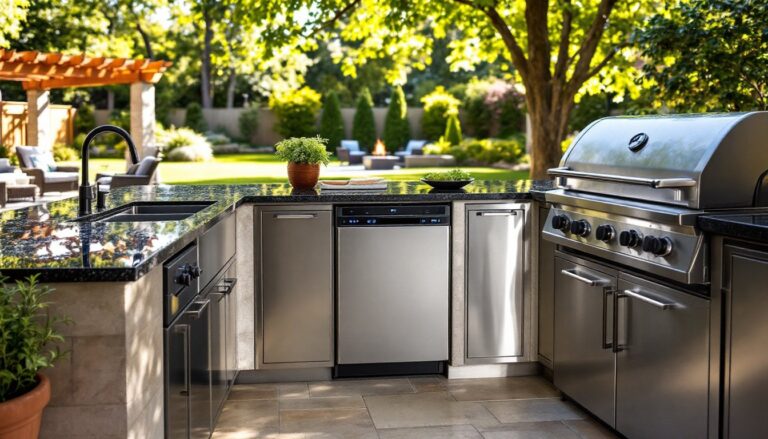
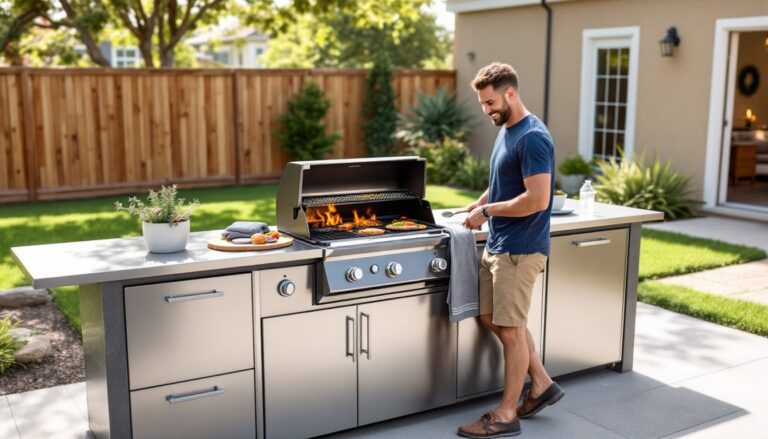
An outdoor kitchen counter takes more abuse than anything inside your house. It faces UV rays, rain, freeze-thaw cycles, grease spatters from the grill, and whatever the neighborhood squirrels decide to drag across it. Pick the wrong material or skip proper prep, and you’ll be looking at cracks, stains, or delamination within a season or two. But choose wisely, and install it right, and you’ll have a workspace that handles everything from Sunday burger duty to Thanksgiving prep without breaking a sweat. This guide walks through the materials that actually hold up outdoors, layout strategies that make cooking easier, and the honest truth about what a homeowner can tackle versus when to call in a pro.
Table of Contents
ToggleKey Takeaways
- An outdoor kitchen counter must handle UV rays, freeze-thaw cycles, and moisture—choosing the right material and proper substrate installation determines whether it lasts decades or fails within a season.
- Granite, concrete, and porcelain tile are the top outdoor kitchen counter materials; granite costs $40–$100 per square foot, concrete offers unlimited customization for $50–$150, and porcelain mimics stone at half the cost.
- Layout your counter using the work triangle concept (grill, sink, prep surface 4–9 feet apart), provide 18–24 inches of staging space on either side of the grill, and slope the surface 1/8 inch per foot for proper drainage.
- DIY-friendly projects include tiling over a concrete backer board and pouring concrete counters, but hire professionals for natural stone slabs, structural assessment, and any gas, electric, or plumbing work.
- Maintain outdoor kitchen counters annually by sealing stone and concrete, replacing cracked tiles immediately, and performing spring inspections to catch water infiltration or damage before minor issues become costly repairs.
Why Your Outdoor Kitchen Counter Matters More Than You Think
Your outdoor kitchen counter isn’t just a place to set down a plate. It’s the primary work surface for food prep, plating, serving, and cleanup, often while you’re managing a hot grill, juggling tongs, and keeping an eye on guests. Skimping on counter space or choosing a surface that can’t handle heat, moisture, or staining turns every cookout into a juggling act.
A well-planned counter also defines your workflow. Position it wrong, and you’re making unnecessary trips back to the house. Size it too small, and there’s nowhere to stage ingredients or rest a cutting board. The material you pick dictates how much maintenance you’ll be doing between grilling seasons.
Outdoor counters also need to survive temperature swings that indoor surfaces never see. A freeze-thaw cycle can crack porous stone or pop tiles loose if the substrate wasn’t built to handle expansion and contraction. UV exposure degrades some sealants and fades certain materials. And unlike indoor counters, outdoor surfaces can’t rely on climate control to stay dry, water infiltration is a constant risk.
Think of your outdoor counter as a tool, not decor. It should make cooking outside easier, not add to your project list every spring.
Best Materials for Outdoor Kitchen Counters
Choosing the right material means balancing durability, maintenance, cost, and how it fits your cooking style. Not every option works in every climate, and some require more upkeep than homeowners expect.
Granite and Natural Stone
Granite is the workhorse of outdoor counters. It handles heat without scorching, resists scratches, and comes in slabs large enough to minimize seams. Expect to pay $40–$100 per square foot installed, depending on the grade and edge profile. Granite needs to be sealed annually with a penetrating sealer designed for outdoor use, indoor sealers don’t hold up under UV and moisture.
One advantage: you can set a hot pan directly on granite without damage, which is useful when you’re moving things off the grill. One downside: granite is heavy. Your base cabinet or masonry support structure needs to handle 18–20 pounds per square foot for a standard 3cm slab.
Soapstone and slate are other natural options. Soapstone is non-porous and doesn’t require sealing, but it scratches more easily and develops a patina over time (some people love the look: others don’t). Slate is affordable and naturally slip-resistant, but it’s more brittle and prone to chipping at edges.
All natural stone should be installed on a concrete backer board or mortar bed, not directly on plywood. Movement in the substrate will telegraph through the stone and cause cracks.
Concrete and Porcelain Tile
Poured concrete counters offer unlimited customization, color, texture, edge profiles, integrated drainboards, even embedded bottle openers. A well-mixed and properly cured concrete counter can last decades. DIYers can pour their own using countertop mix (which has smaller aggregate than standard concrete), but it’s a multi-day process that requires forming, reinforcing with rebar or wire mesh, and finishing with a trowel.
Concrete must be sealed with a food-safe, UV-resistant sealer. Unsealed concrete will stain immediately, think red wine, grease, and rust from cast iron. Reseal every 1–2 years depending on use. Budget $50–$150 per square foot for a professional pour with custom color and finish.
Porcelain tile is underrated for outdoor kitchens. Large-format porcelain slabs (up to 10 feet long) can mimic the look of marble or granite at half the cost, and they’re non-porous, UV-stable, and frost-proof. Standard porcelain tile works too, but grout lines become maintenance points, use epoxy grout rated for outdoor use, not standard cement grout, which will crack and stain.
One key detail: porcelain tile must be installed over a mortar bed on a concrete substrate. Thin-set over plywood will fail outdoors due to moisture and movement. If your base cabinet isn’t masonry, you’ll need to build up a proper substrate first.
For homeowners planning custom outdoor spaces, concrete and porcelain offer serious design flexibility without the weight of stone.
How to Plan Your Outdoor Kitchen Counter Layout
Layout mistakes are harder to fix than material choices. Measure twice, build once.
Start with the work triangle concept from indoor kitchens: grill, sink (if you have one), and prep counter should form a triangle with sides roughly 4–9 feet each. This minimizes wasted steps. If you don’t have a sink, the triangle becomes grill, prep surface, and serving area.
Allow at least 18–24 inches of counter space on either side of the grill for staging. That’s room for a sheet pan of raw burgers on one side and a platter for cooked food on the other. If you’re installing a side burner or pizza oven, give it 12–15 inches of clearance from the grill to avoid crowding.
Counter depth should match your base cabinets or support structure. Standard outdoor kitchen cabinets run 24 inches deep, which means your counter will overhang about 1–1.5 inches in front. If you’re building a bar-height seating area on the back side of the island, plan for a 12-inch overhang to provide knee room, this requires additional support like steel brackets or a corbel every 24 inches.
Height matters too. Standard counter height is 36 inches, same as indoors. Bar height is 42 inches. Mixing both levels in an L-shaped layout gives you a cooking zone and a casual dining zone, which many professional outdoor builds incorporate.
Don’t forget utilities. If you’re running gas, electric, or plumbing to the island, plan the counter layout around where those lines enter the structure. Retrofitting after the counter is in place means cutting through finished surfaces.
One often-missed detail: drainage. Outdoor counters should slope 1/8 inch per foot toward the front edge or have a small integrated drip edge to prevent standing water. This is especially important for outdoor kitchen setups that see frequent use.
DIY Installation vs. Professional Help: What You Need to Know
Some outdoor counter projects are within reach of a confident DIYer. Others require tools, skills, and insurance that most homeowners don’t have.
DIY-friendly options:
- Porcelain or ceramic tile over a concrete backer board, if you’ve tiled before. The substrate prep is the hardest part, the tile itself is straightforward. Rent a wet saw for clean cuts, and use spacers to keep grout lines consistent.
- Concrete countertops poured in place or cast off-site in forms. This is a multi-day project that requires building forms, mixing and pouring concrete, finishing with a trowel, and sealing. Plenty of YouTube tutorials exist, but practice on a small project first, mistakes are hard to fix once the concrete cures.
- Modular outdoor kitchen kits that come with pre-cut counters. Some manufacturers offer granite or porcelain tops sized to fit their cabinet frames. You provide the labor to assemble and level the base.
Call a pro for:
- Natural stone slabs. Granite, marble, and quartzite are cut and fabricated off-site using diamond saws and CNC routers. Installers template your layout, fabricate the slab, then deliver and set it in place. DIY stone installation is possible for smaller pieces (like a 2×2 slab), but anything with seams, cutouts for sinks or grills, or complex edge profiles requires professional gear.
- Structural concerns. If your outdoor kitchen island is built on a poured concrete slab or CMU (concrete block) walls, you’re good. If it’s a wood frame or sitting on pavers, a heavy stone counter may need additional support or a proper foundation. A contractor can assess load-bearing capacity.
- Gas, electric, or plumbing integration. Adding a sink, running a gas line to a side burner, or installing outlet boxes requires permits in most jurisdictions and should be done by licensed tradespeople. DIYing this work can void your homeowner’s insurance if something goes wrong.
One hybrid approach: hire a fabricator to cut and finish a stone slab, then install it yourself if you have a second pair of hands and the right equipment (a slab cart or suction cup lifters help a lot). Some fabricators will template, cut, and deliver for a lower rate if you handle the install.
For those considering expansive outdoor projects, professional installation often includes warranties on both materials and labor, worth considering if this is a high-investment build.
Maintaining Your Outdoor Kitchen Counter for Years of Use
Even the toughest outdoor counter needs regular maintenance. Skipping it means replacing the surface years ahead of schedule.
Granite and natural stone:
- Seal once a year with a penetrating sealer (not a topical coating, which will peel). Test the seal by splashing water on the surface, if it beads up, you’re good. If it soaks in, reseal.
- Clean with pH-neutral stone cleaner or mild dish soap and water. Avoid acidic cleaners (vinegar, lemon juice) and abrasive pads, which can etch or scratch.
- Watch for cracks at seams or edges, especially after winter. Small cracks can be filled with color-matched epoxy before they spread.
Concrete:
- Reseal every 1–2 years depending on wear. High-traffic counters near the grill may need annual resealing.
- Clean up spills immediately. Concrete is porous, even when sealed, and acidic or oily substances will stain if left to sit.
- Minor chips or edge damage can be patched with concrete repair caulk or a small batch of countertop mix, then re-finished and sealed.
Porcelain tile:
- Wipe down with water and mild detergent. Porcelain itself is nearly indestructible, but grout lines can stain.
- Seal grout lines with grout sealer once a year. Epoxy grout (recommended for outdoor use) doesn’t technically need sealing, but it helps.
- Replace any cracked or loose tiles immediately. Water infiltration under a tile can damage the substrate and spread to adjacent tiles.
General outdoor counter care:
- Cover your counter or the entire outdoor kitchen during the off-season if you live in a freeze-thaw climate. A fitted cover prevents snow and ice from sitting on the surface.
- Avoid cutting directly on stone or concrete. Use a cutting board to protect both the surface and your knives.
- Don’t drag cast iron skillets or grill grates across the counter. Even hard materials like granite can scratch or scuff.
- Inspect the sealant bead where the counter meets the backsplash or side walls. Re-caulk with exterior-grade silicone if the bead has cracked or pulled away, water intrusion behind the counter will rot wood framing or corrode fasteners.
Many outdoor living enthusiasts recommend a spring deep-clean and inspection as part of your pre-season checklist. Fifteen minutes of maintenance in April beats a costly repair in July.
Winter prep is especially important. If your counter has a sink, drain all water lines and blow them out with compressed air to prevent freeze damage. Remove any decorative outdoor furniture or accessories that could blow onto the counter during storms.
For those in rural or country-style outdoor setups, critters can be an issue. Seal any gaps between the counter and cabinetry to keep mice, insects, or birds from nesting underneath.