Planning an outdoor kitchen isn’t just about dropping a grill on the patio. It’s about creating a functional cooking and entertaining zone that withstands weather, fits your lifestyle, and actually gets used year after year. Whether someone’s grilling once a week or hosting weekend cookouts, a well-designed outdoor kitchen can transform how a yard is used. But the difference between a successful project and a costly mistake often comes down to thoughtful design, material choices, and understanding what’s realistic for a given budget and space. Here’s what homeowners need to know about working with an outdoor kitchen designer, or tackling the project themselves.
Table of Contents
ToggleKey Takeaways
- An outdoor kitchen designer ensures proper routing of gas lines, drainage, and material selection to prevent costly mistakes and code violations that homeowners might overlook.
- The work triangle—positioning your grill, sink, and prep zone within a few steps of each other with at least 36 inches of counter space—is fundamental to outdoor kitchen workflow and functionality.
- Stainless steel appliances, marine-grade polymer cabinets, and weather-resistant materials like granite or porcelain tile dramatically extend the lifespan of your outdoor kitchen in harsh climates.
- Built-in gas lines, electrical work, and structural additions require licensed professionals and permits; DIY mistakes in these areas create safety hazards and fail inspections.
- Outdoor kitchen costs range from $3,000 for a basic grill island to $50,000+ for high-end builds; appliances typically represent the largest expense, followed by countertops and utility installation.
- Choosing the right outdoor kitchen designer requires reviewing portfolios of completed projects, verifying licensing and insurance, and comparing detailed quotes to avoid budget surprises.
Why Hire an Outdoor Kitchen Designer?
An outdoor kitchen designer brings expertise that goes beyond picking pretty tile. They understand how to route gas lines safely, manage drainage so water doesn’t pool around cabinetry, and select materials that won’t crack in freeze-thaw cycles. Most importantly, they know how to create a workflow that makes sense, keeping the grill, sink, and prep surfaces in a logical triangle just like an indoor kitchen.
Designers also navigate code requirements. Many jurisdictions require permits for gas line installation, electrical work (covered under NEC), and sometimes even structural additions like pergolas or pavilions. A designer familiar with local building codes can streamline inspections and prevent costly rework. For homeowners who aren’t sure where vents should go, what clearance a built-in grill needs from combustible surfaces, or how to size a concrete pad for heavy stone counters, a designer’s input can save time and prevent mistakes.
Another advantage: access to trade pricing and vetted contractors. Designers often have relationships with masons, electricians, and fabricators, which can mean better quality control and sometimes lower material costs. They also create scaled drawings and 3D renderings, helping homeowners visualize the space before breaking ground.
Key Elements Every Outdoor Kitchen Designer Considers
Layout and Workflow
A good designer starts with the work triangle: grill, sink, and refrigeration or prep zone. Ideally, these should be within a few steps of each other, with at least 36 inches of counter space on either side of the grill for plating and tool staging. Traffic flow matters too, guests shouldn’t have to walk through the cooking zone to reach seating or the house.
Zones are critical. Separate the cooking area from dining and lounging spaces to keep smoke and heat away from seating. If the kitchen is part of a larger outdoor living space, designers position the kitchen to face the house or main gathering area, so the cook isn’t isolated. Some layouts incorporate a bar or countertop overhang for casual seating, which keeps conversation flowing while food’s on the grill.
Utility access is another consideration. Gas lines, water supply, and electrical outlets need to be routed from the house or a dedicated source. Designers plan these early to avoid tearing up finished hardscape later. They also account for GFCI-protected outlets (required by code for outdoor use) and proper venting for gas appliances.
Material Selection and Durability
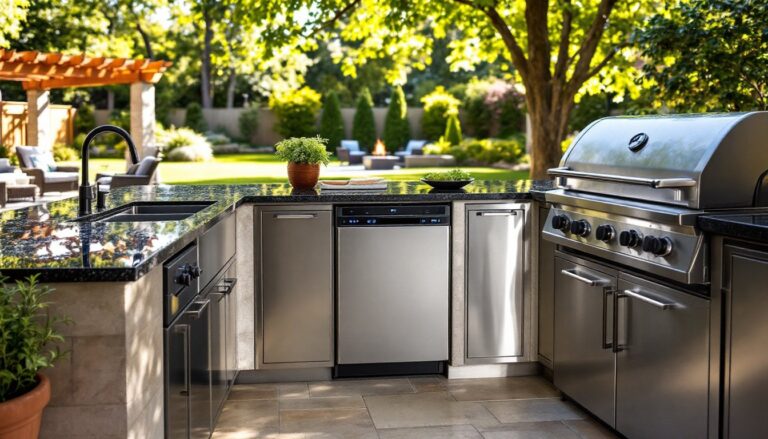
Outdoor kitchens face UV exposure, temperature swings, rain, and in some climates, snow and ice. Material choices can make or break longevity. Designers typically recommend stainless steel for appliances and cabinet frames (look for 304-grade stainless for better corrosion resistance). For countertops, granite, concrete, or porcelain tile hold up better than laminate or wood.
Cabinet carcasses should be either marine-grade polymer or powder-coated aluminum, never standard plywood, which delaminates when wet. Doors can be stainless, weatherproof high-density polyethylene (HDPE), or even treated hardwood if sealed annually. Many designers steer clients toward luxury outdoor living finishes like stone veneers or stucco for base structures, which add visual weight and weather resistance.
For flooring and surrounds, natural stone, pavers, or stamped concrete are common. Each has trade-offs: natural stone is beautiful but porous (seal it), pavers can shift over time (use a compacted base and edge restraints), and concrete can crack without proper control joints. Designers also specify slip-resistant finishes, wet feet and grease don’t mix well with glossy tile.
How to Choose the Right Outdoor Kitchen Designer
Start by asking for a portfolio that includes completed outdoor kitchens, not just indoor remodels or landscaping. Look for projects similar in scope and style to what’s envisioned. Check if they’ve worked with the materials and appliances being considered, a designer experienced in custom outdoor living projects will have solved problems like integrating a wood-fired pizza oven or routing propane to a fire pit.
Licensing and insurance matter. If the designer is also acting as a general contractor or coordinating trades, they should hold the appropriate state or local contractor’s license. Ask about liability insurance and whether subcontractors are also insured. This protects the homeowner if someone gets hurt on-site or if work doesn’t meet code.
Get at least three quotes and compare not just price, but scope. Does the estimate include demo, utility connections, and finishing details like backsplashes? Or are those “allowances” that could balloon the final cost? A good designer provides a line-item breakdown, so there are no surprises.
Finally, ask about the design process. Will they provide CAD drawings? How many revision rounds are included? Some designers charge a flat design fee, others roll it into the build cost. According to planning resources like Houzz, understanding the full scope upfront prevents mismatched expectations later.
DIY vs. Professional Outdoor Kitchen Design
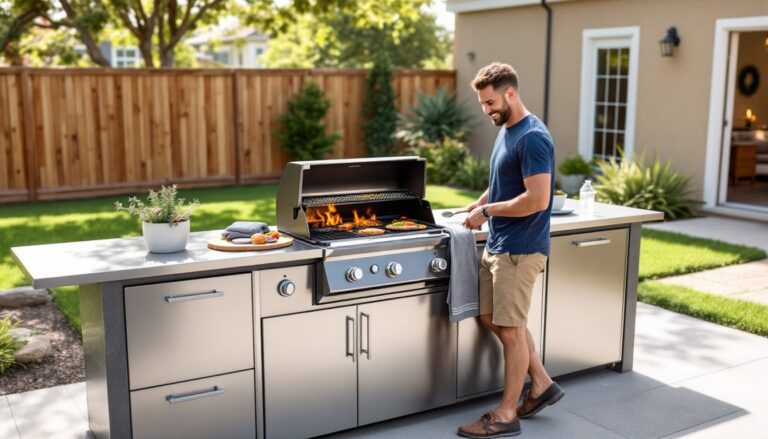
A homeowner comfortable with basic carpentry and plumbing can handle simpler projects, think a freestanding grill island with a small sink and storage. Modular kits (steel frame with cement board and stone veneer) are available from several manufacturers and can be assembled over a weekend. These typically don’t require structural footings, just a level concrete pad.
But built-in gas lines, electrical, and plumbing should be left to licensed tradespeople. Most jurisdictions require permits and inspections for these. Running a gas line incorrectly is a safety hazard, and faulty wiring outdoors can lead to shock or fire. Even if someone’s handy, hiring an electrician for the rough-in and a plumber for water supply and drainage is money well spent.
Structural work, like building a pergola, installing heavy stone counters, or constructing a pavilion, often requires engineering and permits. Load-bearing posts need proper footings below the frost line (depth varies by region, typically 36 to 48 inches in northern climates). DIYers who skip this step risk settling, cracking, or even collapse.
For complex designs that integrate multiple appliances, custom cabinetry, or coordinated hardscaping, a professional designer ensures everything works together. They also handle sequencing: pouring the pad, setting the frame, rough-in utilities, installing appliances, then finishing surfaces. Trying to coordinate five different trades without experience often leads to delays and mistakes.
Budget Planning for Your Outdoor Kitchen Project
Outdoor kitchen costs vary wildly depending on size, materials, and appliances. A basic grill island with storage might run $3,000 to $8,000 for a DIY build using modular components. A mid-range setup, built-in grill, sink, refrigerator, and stone counters, typically lands between $10,000 and $25,000. High-end projects with custom cabinetry, premium appliances, pergolas, and full utility build-outs can easily exceed $50,000.
Appliances are often the biggest line item. A quality built-in gas grill starts around $1,500: high-end models with infrared burners and rotisseries can hit $5,000 or more. Add a side burner ($300–$800), outdoor-rated refrigerator ($800–$2,500), and a sink with hot/cold water, and appliances alone can top $8,000. Don’t forget the gas line or dedicated propane tank setup, which might add another $500 to $1,500 depending on distance from the source.
Materials vary by region and availability. Natural stone counters run $50 to $150 per square foot installed: concrete is similar. Porcelain tile is cheaper but still durable. Stainless cabinetry costs more upfront than polymer, but lasts longer. For base construction, concrete block with stone veneer is a cost-effective middle ground.
Permits and utilities add to the budget. Permit fees range from $100 to $500+ depending on scope. Trenching for gas, water, and electric can run $1,000 to $3,000 if distances are long or if rock needs to be excavated. Plan for a 10–15% contingency to cover surprises like unexpected grading or upgraded materials.
Design services, when not bundled with construction, typically cost $1,000 to $5,000 depending on project complexity. Some designers charge hourly ($75–$200/hour), others a flat fee. For homeowners who want professional input without a full build contract, a design-only consultation can provide drawings and material specs to take to contractors.
Finally, consider long-term costs. Stainless steel needs occasional cleaning to prevent oxidation. Stone counters should be resealed every 1–3 years. Gas appliances require annual burner inspections. Budgeting for maintenance keeps the kitchen looking good and functioning safely for years. For those exploring broader luxury outdoor living spaces, integrating the kitchen into a cohesive design often delivers better ROI than a standalone grill island.