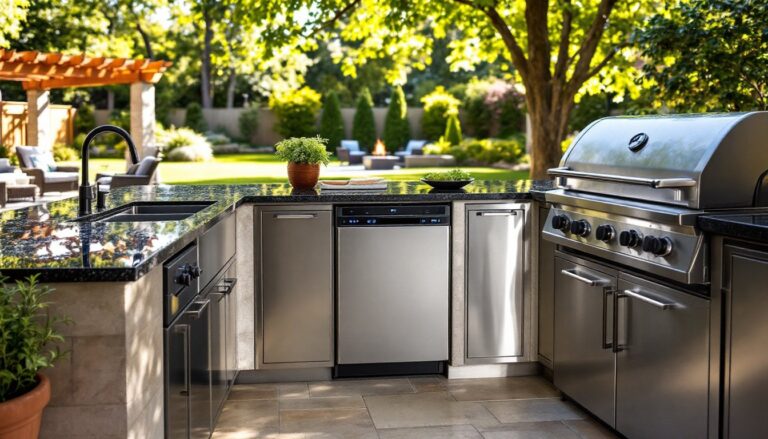
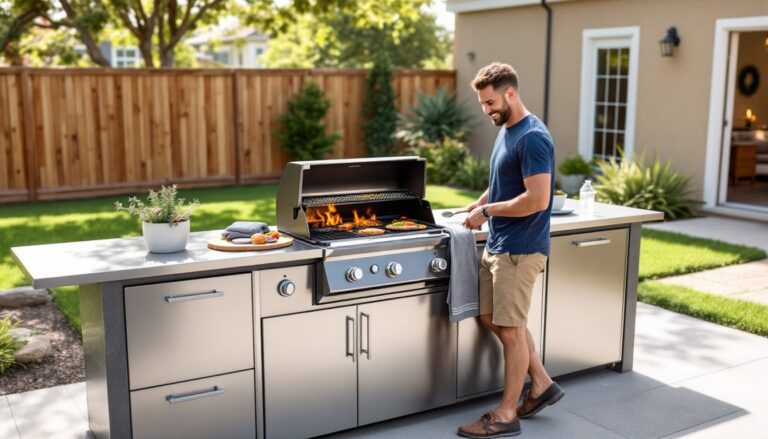
An enclosed outdoor kitchen lets homeowners cook, entertain, and dine outside without worrying about weather, pests, or seasonal limits. Unlike open-air setups that sit unused half the year, an enclosed design extends the outdoor cooking season, sometimes year-round, depending on climate. It’s a serious investment that blends architecture, mechanical systems, and durable materials into a functional space that feels like an extension of the home’s interior. This guide covers what defines an enclosed outdoor kitchen, why it outperforms open designs, and how to plan, budget, and build one that works for the long haul.
Table of Contents
ToggleKey Takeaways
- An enclosed outdoor kitchen protects appliances and users from weather, pests, and seasonal limitations, extending the usable cooking season year-round depending on your climate.
- Proper ventilation and climate control systems—including rated range hoods, mini-split heat pumps, and ceiling fans—are essential for safety, comfort, and code compliance in an enclosed outdoor kitchen.
- Choose durable, weather-resistant materials like granite or porcelain countertops, marine-grade polymer cabinetry, and stainless steel hardware to prevent rust, warping, and moisture damage.
- Design your enclosed outdoor kitchen layout using the work triangle principle, keeping the grill, sink, and refrigerator within 26 feet total perimeter and leaving adequate counter space on each side of the grill.
- Budget $15,000–$30,000 for a basic three-season screened pavilion or $60,000–$100,000+ for a fully insulated four-season structure with HVAC and premium appliances, accounting for permits and professional installation.
- Most enclosed outdoor kitchens require building permits and inspections, especially if adding plumbing, gas lines, or electrical work—consult local codes early to understand zoning and energy requirements.
What Is an Enclosed Outdoor Kitchen?
An enclosed outdoor kitchen is a cooking and dining space built outside the main house but protected by walls, a roof, and often windows or screens. It’s not just a grill under a pergola, it’s a fully or partially enclosed structure designed to shield the cook and appliances from wind, rain, snow, and insects.
Typical enclosures include three-season rooms with screened walls, four-season pavilions with insulated walls and HVAC, or partial enclosures with a solid roof and one or two open sides. The level of enclosure depends on climate, budget, and how the homeowner plans to use the space.
Most enclosed outdoor kitchens include a grill or cooktop, countertop workspace, storage cabinets, and sometimes a sink, refrigerator, or bar seating. The structure itself may be a freestanding pavilion, an attached addition to the house, or a converted garage or shed. Because it’s a permanent structure, most jurisdictions require building permits and inspections, especially if plumbing, gas lines, or electrical work is involved.
Key distinction: if the space has climate control (heating or air conditioning), it’s typically classified as conditioned space under the International Residential Code (IRC), which triggers stricter energy code requirements. Check local zoning before breaking ground.
Why Choose an Enclosed Design Over an Open-Air Setup?
Open-air kitchens are great in dry, mild climates, but they’re seasonal at best in regions with rain, snow, or temperature swings. An enclosed design solves those limits and adds functionality that open setups can’t match.
Weather protection is the biggest draw. Wind blows out burners, rain soaks countertops, and snow buries equipment. Enclosing the space means cooking in January or during a thunderstorm isn’t a dealbreaker. Homeowners who invest in high-end grills, pizza ovens, or refrigeration don’t want those sitting idle eight months a year.
Pest control is another win. Flies, mosquitoes, wasps, and rodents love open kitchens. Screens or solid walls keep them out without coating everything in citronella. For households that entertain regularly, this alone justifies the cost.
Security matters if the kitchen includes expensive appliances or stored tools. An enclosed space with a locking door protects gear from theft or vandalism. It also keeps curious kids or pets away from hot surfaces and sharp implements when the space isn’t supervised.
Climate control options let the space function year-round. Adding a ceiling fan, space heater, or mini-split HVAC system makes a screened pavilion usable in shoulder seasons and a fully insulated room comfortable in winter. Many custom outdoor living projects now include zoned heating and cooling to maximize use.
Cleanliness improves dramatically. Pollen, leaves, and dust don’t coat the counters daily. Grease and smoke ventilate properly instead of drifting onto patio furniture or into the house. Cleanup is faster, and the space stays ready to use without a power wash every weekend.
Essential Design Features for Your Enclosed Outdoor Kitchen
Ventilation and Climate Control Systems
Ventilation isn’t optional, it’s code-mandated in most jurisdictions when cooking appliances are installed indoors or in enclosed spaces. Grills, griddles, and stovetops produce smoke, grease-laden vapor, and carbon monoxide. Without proper exhaust, the space becomes unsafe and unpleasant fast.
A range hood rated for outdoor or commercial use is the baseline. Look for models rated at 400–600 CFM (cubic feet per minute) for typical residential grills. Larger built-in grills or multiple burners may require hoods rated at 900+ CFM. The hood should vent to the outside, never recirculate air in an enclosed space.
Ducting must be rigid metal (galvanized steel or stainless), not flexible foil duct, and should run the shortest path possible to an exterior wall or roofline. Elbows and long runs reduce airflow efficiency. If the kitchen is part of a four-season structure, the ductwork may need insulation to prevent condensation.
For year-round comfort, consider a mini-split heat pump or radiant patio heater. Mini-splits are efficient and quiet, with outdoor-rated units designed to operate down to 5°F or lower. Radiant heaters (propane or electric) work well in three-season spaces where full HVAC isn’t practical. Ceiling fans help circulate air and reduce reliance on AC in warmer months.
If the structure is fully enclosed and insulated, it may need to meet local energy codes, including minimum R-values for walls and ceiling and air sealing standards. This is especially true if adding HVAC, consult the IRC and local amendments.
Durable Materials That Withstand the Elements
Even in an enclosed space, materials face temperature swings, humidity, and occasional water exposure. Choose finishes and substrates that won’t rot, rust, or warp.
Countertops: Granite, concrete, and porcelain tile are top choices. Granite handles heat well but needs sealing annually. Poured concrete is customizable and durable but requires professional installation and periodic resealing. Porcelain tile resists stains and moisture but grout lines need maintenance. Avoid laminate, it delaminates in humidity.
Cabinetry: Marine-grade polymer cabinets (like those from HGTV’s outdoor kitchen guides) or stainless steel frames with polymer doors outlast wood. If using wood, choose exterior-grade plywood with marine varnish or outdoor-rated paint. Cedar and teak hold up better than pine or oak, but they’re pricier. All wood cabinets need ventilation to prevent mold.
Flooring: Porcelain or ceramic tile rated for outdoor use (slip-resistant, freeze-thaw stable) is the safest bet. Stamped concrete or sealed pavers work too, especially if the space is only partially enclosed. Avoid composite decking near grills, it can melt or discolor from heat. If installing tile, use a waterproof membrane under the substrate and flexible grout to handle minor movement.
Walls and ceilings: Fiber-cement siding (like HardiePlank) or exterior-grade plywood sheathing with weather-resistant paint are standard. For insulated four-season spaces, use moisture-resistant drywall (green board or purple board) on interior faces. Exposed wood beams should be pressure-treated or naturally rot-resistant species like cedar or redwood.
Fasteners and hardware: Stainless steel screws, hinges, and drawer slides prevent rust. Galvanized or zinc-plated fasteners corrode quickly in humid or coastal environments.
Planning Your Layout: Zones and Workflow Considerations
Good kitchen design, indoor or out, follows the work triangle principle: placing the sink, cooktop, and refrigerator within easy reach of each other. In an enclosed outdoor kitchen, that triangle should be compact (total perimeter under 26 feet) to minimize steps during meal prep.
Divide the space into functional zones:
- Cooking zone: Grill, side burners, griddle, or pizza oven. Allow at least 18 inches of counter space on either side of the grill for plating and utensils. If using propane, tank storage should be ventilated and accessible but not in the main traffic path.
- Prep zone: Sink, cutting board, and counter workspace. A 30-inch-wide counter gives enough room to chop and assemble. If adding a sink, plan for hot and cold water lines and a P-trap that won’t freeze (or install a drain valve for winterizing).
- Storage zone: Cabinets and drawers for utensils, cookware, and dry goods. Group storage near the point of use, grilling tools near the grill, plates and glassware near the serving area.
- Serving and dining zone: Bar seating, countertop overhang, or adjacent table. A 12-inch overhang accommodates bar stools: 15 inches is more comfortable. Leave 36 inches of clearance behind stools for traffic flow.
Consider the door swing and traffic patterns. If the kitchen opens to a patio or yard, position the grill so the cook faces guests, not a wall. Avoid placing the sink or cooktop directly in front of a door, it creates bottlenecks.
For electrical planning, include GFCI-protected outlets spaced no more than 4 feet apart along countertops (per NEC requirements). Add dedicated circuits for refrigerators, freezers, or other appliances. Lighting should include task lighting over prep and cooking areas (dimmable LEDs rated for damp or wet locations) and ambient lighting for dining. If the space is screened but not fully enclosed, use wet-rated fixtures.
If the design includes a bar or beverage station, think about ice maker plumbing, bottle storage, and glass racks. Many professional outdoor living space designers recommend separating the bar from the cooking zone to reduce congestion during parties.
Budget Breakdown: What to Expect When Building an Enclosed Outdoor Kitchen
Costs vary wildly based on size, enclosure type, appliances, and whether the homeowner DIYs or hires out. A basic three-season screened pavilion with a grill, mini-fridge, and counter runs $15,000–$30,000. A four-season insulated structure with HVAC, plumbing, and high-end appliances can hit $60,000–$100,000+.
Breakdown by category (rough national averages, 2026):
- Structure and framing: $8,000–$25,000. Includes foundation (concrete slab or pier-and-beam), wall framing, roof trusses, and exterior sheathing. Attached structures cost less than freestanding pavilions. Insulated walls and energy-efficient windows add $5,000–$10,000.
- Roofing: $2,000–$6,000. Asphalt shingles are cheapest: metal or tile roofing costs more but lasts longer and handles wind/snow better.
- Appliances: $3,000–$20,000+. A basic built-in gas grill starts around $1,500. Add a side burner ($300–$800), outdoor-rated refrigerator ($800–$2,500), and sink with faucet ($400–$1,200). High-end grills, smokers, or pizza ovens can run $5,000–$15,000 each.
- Countertops and cabinetry: $3,000–$12,000. Granite or concrete countertops cost $50–$150 per square foot installed. Marine-grade polymer cabinets run $150–$300 per linear foot: stainless steel is pricier.
- Utilities (plumbing, gas, electric): $3,000–$10,000. Running a gas line from the house costs $500–$2,000, depending on distance. Adding water and drain lines runs $1,500–$4,000. Electrical work (outlets, lighting, GFCI panels) typically costs $1,500–$5,000. Permits and inspections add $500–$1,500.
- Ventilation and HVAC: $2,000–$8,000. A quality range hood with ductwork runs $1,200–$3,500 installed. A mini-split heat pump costs $2,500–$6,000, including the outdoor condenser unit.
- Flooring: $1,500–$5,000. Porcelain tile averages $8–$15 per square foot installed: stamped concrete runs $10–$18 per square foot.
Labor typically accounts for 40–60% of total cost if hiring contractors. Homeowners comfortable with framing, electrical, and plumbing can cut costs significantly, but most enclosed kitchens require professional help for at least part of the build, especially if permits and inspections are involved.
Permits and inspections vary by jurisdiction but generally cost $500–$2,000. Some municipalities treat enclosed outdoor kitchens as accessory structures (like a shed), while others classify them as habitable space if they include HVAC. Consult local building departments early.
Timeline: expect 6–12 weeks from permit approval to completion for a contractor-led build. DIY projects can stretch longer, especially if working weekends.
For design inspiration and material ideas, resources like Homedit and The Kitchn offer galleries and case studies that help homeowners visualize layouts and finishes before committing to a budget.