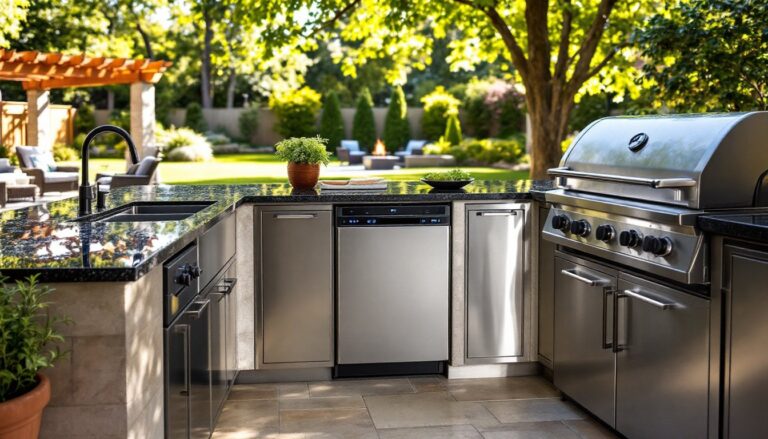
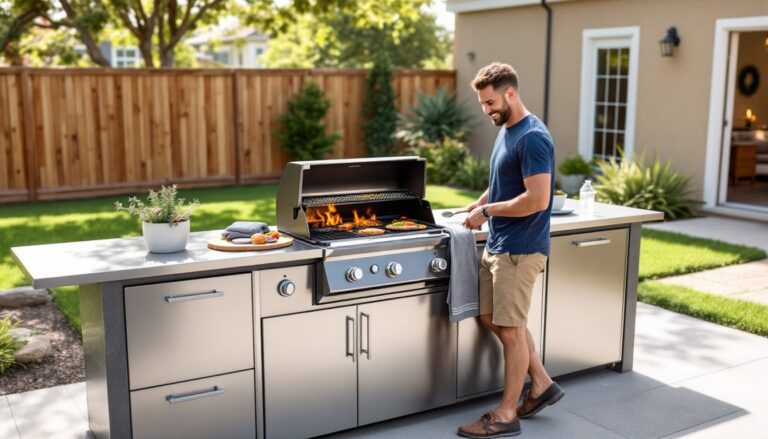
Building an outdoor kitchen isn’t just about tossing a grill on the patio. It’s a collection of hardworking components that need to survive rain, heat, UV exposure, and grease spatters while staying functional for years. Whether you’re planning a full outdoor cooking suite or piecing together a setup over time, knowing which components matter, and how they hold up outdoors, saves money and prevents headaches down the road. This guide breaks down the essentials, from cooking appliances to utility features, so you can build a backyard setup that actually works.
Table of Contents
ToggleKey Takeaways
- Built-in grills require proper sizing (40,000–60,000 BTU), 304-grade stainless steel, and 6 inches of clearance for airflow—always hire licensed professionals for gas line installation to meet permit requirements.
- Durable outdoor kitchen components must resist moisture, UV exposure, and temperature swings; prioritize 304-grade stainless steel cabinets with welded seams and outdoor-rated hardware like ball-bearing drawer glides.
- Countertop materials matter: granite, concrete, and sintered stone are weather-resistant options, while laminate, wood, and standard marble fail quickly outdoors and should be avoided.
- Utility features like sinks, outdoor-rated refrigerators, and GFCI-protected electrical circuits transform a grill station into a functional outdoor kitchen—plan for at least two dedicated 20-amp circuits.
- Proper planning prevents costly mistakes: allow 24 inches of prep space on one side of the grill, install PEX tubing for freeze tolerance, and invest in quality foundations for heavy components like pizza ovens to prevent settling and cracking.
- Choose countertop depth of at least 24 inches with a 12–15 inch front overhang for bar seating, and select materials like epoxy-grouted large-format tile or sintered stone for long-term durability in outdoor conditions.
Essential Cooking Appliances for Your Outdoor Kitchen
The cooking appliances anchor the entire kitchen. Get these right, and everything else falls into place.
Built-In Grills and Smokers
Built-in grills are the centerpiece. Unlike freestanding models, they’re designed to drop into a countertop structure, usually with a cutout that matches the grill’s dimensions. Most manufacturers provide rough-in specs, follow them exactly, and leave at least 6 inches of clearance behind the grill for airflow and gas line access.
Gas grills dominate outdoor kitchens because they’re convenient. Look for stainless steel construction (304-grade holds up better than 430-grade in coastal or humid climates). BTU ratings matter, but don’t chase the highest number, 40,000 to 60,000 BTU is plenty for a standard 36-inch grill. Higher BTUs mean more fuel consumption without much heat benefit if the burner design is poor.
Charcoal and pellet grills are harder to build in but not impossible. They generate more smoke and ash, so ventilation becomes critical. If you’re serious about smoking, consider a standalone offset smoker placed adjacent to the kitchen rather than integrating it into the counter.
Permit requirements vary, but most jurisdictions require a permit for permanent gas line installation. Hire a licensed plumber or gas fitter for the hookup, DIY gas work is illegal in many areas and voids homeowner’s insurance.
Side Burners and Pizza Ovens
Side burners extend your cooking options. A built-in dual burner (around 30,000 BTU total) lets you sauté vegetables, boil corn, or simmer sauces without running inside. They drop into the countertop like grills, typically requiring a 10-inch by 18-inch cutout. Match the brand to your grill when possible, components from the same line share finish and knob styles.
Pizza ovens are having a moment, and for good reason. Wood-fired models reach 700–900°F, which is essential for authentic Neapolitan-style pizza. Gas-powered versions are easier to maintain but won’t hit the same peak temps. Both types are heavy, a full-size oven can weigh 500+ pounds, so your base structure needs proper reinforcement. Pour a thickened concrete pad or build a reinforced CMU (concrete masonry unit) base. This isn’t optional: settling or cracking will ruin the oven.
Ventilation codes apply to pizza ovens in many regions, especially if the setup is covered or enclosed. Check local code before you build. Some areas require a Type I hood system, which is expensive and complicated.
Storage and Prep Station Components
Outdoor storage fights moisture, pests, and temperature swings daily. Choose components built for it.
Stainless steel cabinets and drawers are the standard. Look for 304-grade stainless with fully welded seams, not spot-welded or riveted corners where water sneaks in. Drawers should have ball-bearing glides rated for outdoor use, standard indoor hardware rusts within a season.
Door and drawer fronts should match your grill brand if you want a cohesive look, but mixing is fine if finishes are close. Soft-close hinges add a nice touch and reduce slamming that loosens hardware over time.
If you’re working with custom outdoor setups, storage can be tailored to fit specific tools, oversized platters, or even a built-in trash pullout. Trash drawers need a liner or removable bin, no one wants to scrub rotting food residue out of stainless steel.
Access doors are cheaper than drawers and work well for hiding propane tanks, a fire extinguisher, or plumbing shutoffs. Install them with the hinge on the side opposite prevailing wind so they don’t blow open.
Non-metal storage options exist, polymer cabinets are rust-proof and lightweight, but they degrade under UV exposure and look cheaper. If budget is tight, they’ll work for 5–7 years before cracking.
Prep space matters as much as storage. Plan for at least 24 inches of clear counter on one side of the grill and 18 inches on the other. That’s enough room to stage raw proteins on one side and cooked food on the other without cross-contamination.
Countertops and Work Surfaces That Withstand the Elements
The countertop takes a beating, hot pans, knives, spills, freeze-thaw cycles, and UV. Choose wrong, and you’ll see cracks or stains within a year.
Granite and concrete are the most common. Granite slabs (especially darker colors) handle heat well and resist staining if sealed annually. Expect to pay $50–$100 per square foot installed, depending on the stone and edge profile. Concrete can be poured on-site or precast. It’s customizable and durable, but it requires sealing every 1–2 years and can crack if the base settles.
Tile is the budget option. Large-format porcelain tiles (12×24 inches or bigger) minimize grout lines, which are the weak point. Use epoxy grout, not standard cement-based grout, it’s waterproof and won’t stain. Tile edges need bullnose pieces or a metal edge trim: raw tile edges chip easily.
Sintered stone (brands like Dekton or Neolith) is gaining traction. It’s UV-stable, heat-resistant, and nearly scratch-proof, but costs $75–$150 per square foot. Worth it if you’re building a high-end kitchen that needs to last decades.
Avoid laminate, butcher block, and standard marble. Laminate delaminates in moisture. Wood rots. Marble etches from acidic foods and beverages, and outdoor exposure accelerates it.
Counter depth should be at least 24 inches to accommodate a standard grill and leave room in front. An overhang of 12–15 inches on the front creates bar seating if you add stools.
Utility Features: Sinks, Refrigeration, and Electrical
Utilities transform an outdoor grill station into a true kitchen, but they add complexity and cost.
Sinks are worth the plumbing hassle. A small bar sink (12–15 inches) with a single-handle faucet keeps you from tracking raw chicken juice through the house. Install a shut-off valve underneath so you can winterize in cold climates, trapped water in the line will freeze and burst the pipe. Use PEX tubing for the supply line: it’s more freeze-tolerant than copper or CPVC.
Drainage is trickier. You can run a drainpipe to the main sewer line (requires a permit and proper slope), or use a gray-water drain that empties into a gravel-filled dry well. Local codes vary, some prohibit gray water discharge entirely.
Outdoor-rated refrigerators run $800–$3,000+ depending on size and features. Look for units rated for outdoor or marine use, they have sealed components to resist moisture and temperature extremes. Standard indoor fridges fail quickly outside. Many <a href="https://marnihalasa.com/pro-fit-outdoor-living/”>professional outdoor living installations recommend units with a temperature range down to 40°F even in 100°F+ ambient heat.
Some homeowners skip the fridge and install a kegerator or beverage cooler instead. Both work well and cost less, but they don’t hold perishables.
Electrical is non-negotiable for fridges, lighting, and outlets. All outdoor circuits must be GFCI-protected per NEC (National Electrical Code). Outlets should be weatherproof with in-use covers (the kind that close even with a plug inserted). Hire a licensed electrician for the rough-in unless you’re comfortable pulling permits and working in your panel, mistakes here are dangerous and expensive.
Plan for at least two 20-amp circuits: one dedicated to refrigeration, one for outlets and lighting. If you’re adding a vent hood or electric heater, those may need separate circuits.
Lighting matters more than people think. Undermount LED strips along the counter edge and overhead task lighting above the grill make cooking after dark actually feasible. Outdoor design resources often recommend warm white (2700–3000K) LEDs to match the ambiance of a backyard rather than bright white commercial tones.
Conclusion
A well-planned outdoor kitchen balances appliances, storage, durable surfaces, and the utilities that tie it all together. Start with cooking components that match how you actually grill, then layer in storage and prep space. Invest in countertops and refrigeration that won’t need replacing in three years. Most importantly, don’t skip permits, gas line professionals, or proper electrical work, saving a few hundred dollars upfront isn’t worth the risk or the repair bill.