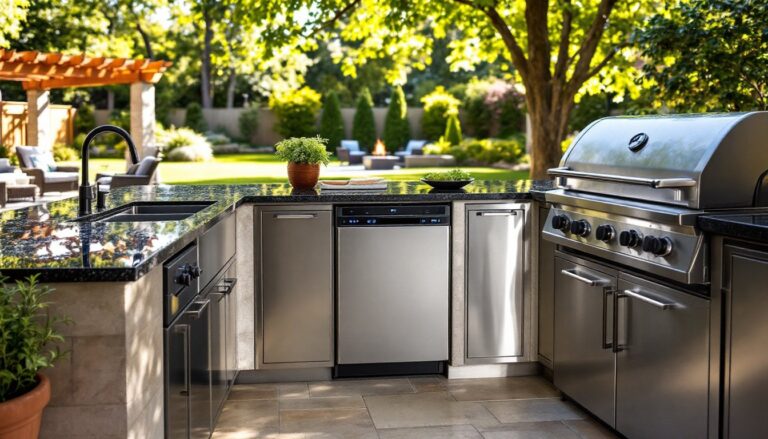
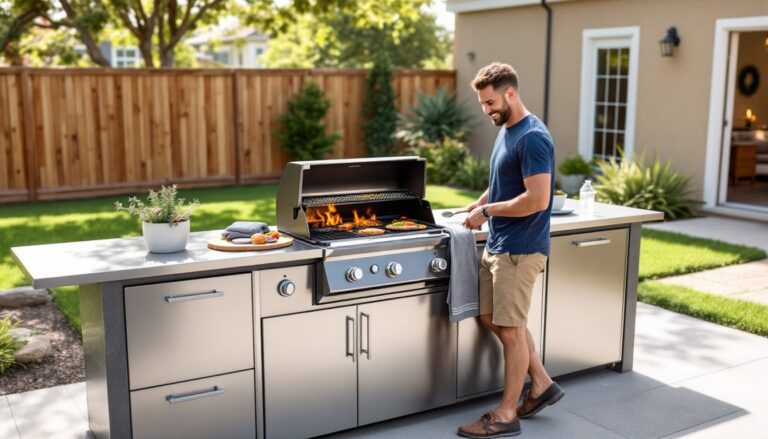
An outdoor kitchen grill island transforms a basic patio into a functional cooking and entertaining hub. Instead of running inside for utensils or juggling plates on a side table, homeowners get dedicated countertop space, storage, and built-in equipment that anchors the outdoor living area. It’s more than a grill on wheels, it’s a permanent structure designed to streamline prep, cooking, and cleanup while guests stay put in the backyard. Whether planning a compact two-burner setup or a sprawling cook station with a sink and refrigerator, understanding the essentials of design, materials, and installation keeps the project on track and on budget.
Table of Contents
ToggleKey Takeaways
- An outdoor kitchen grill island centralizes cooking tasks and reduces indoor trips by providing dedicated countertop space, storage, and built-in appliances for a permanent outdoor living hub.
- Most grill islands range from 6 to 10 feet long and require at least 36 inches of clearance behind and 48 inches in front for safe, functional access and guest traffic flow.
- Choose durable materials like granite, concrete, or tile for countertops and stone veneer or stucco for cladding to withstand outdoor heat, moisture, and UV exposure without warping.
- Gas line installation, electrical wiring, and plumbing require licensed professionals in most jurisdictions—skipping permits can complicate insurance claims and home sales.
- Professional outdoor kitchen grill island installation typically costs $5,000–15,000 and takes 1–2 weeks, while DIY with prefabricated kits ranges $1,500–3,000 but requires 2–4 weekends of work.
- Outdoor-rated refrigeration, side burners, and LED lighting significantly improve entertaining flexibility and year-round usability while increasing property value by recouping 50–70% of construction costs at resale.
What Is an Outdoor Kitchen Grill Island?
An outdoor kitchen grill island is a freestanding or built-in structure that houses a gas or charcoal grill along with countertop work surfaces and optional accessories like side burners, storage cabinets, or a mini-fridge. Unlike a standalone grill, the island integrates multiple components into one cohesive unit.
The frame is typically constructed from steel studs, concrete block, or pressure-treated lumber, then clad with weather-resistant finishes such as stacked stone veneer, stucco, or tile. Countertops are usually granite, concrete, or tile, materials that handle heat, moisture, and UV exposure without warping or fading.
Most islands range from 6 to 10 feet long and include at least 24 inches of counter space on each side of the grill for plating and prep. The grill itself sits in a cutout, vented from below to prevent heat buildup. Gas lines or propane connections run through the base, and electrical outlets support accessories like rotisseries or lights.
This setup differs from modular outdoor kitchen kits, which arrive as prefabricated units. Grill islands can be custom-built to fit specific dimensions and site conditions, making them adaptable to corner layouts, curved patios, or sloped yards.
Benefits of Adding a Grill Island to Your Outdoor Space
A grill island centralizes outdoor cooking tasks, reducing trips indoors and keeping the cook engaged with guests. Instead of balancing plates on a grill shelf, homeowners gain counter space for chopping vegetables, resting meat, or assembling burgers.
Increased property value is a common benefit. According to real estate trends, outdoor kitchens appeal to buyers in warm-climate markets and can recoup 50–70% of construction costs at resale, depending on quality and regional demand.
Entertainment flexibility improves when the grill island includes extras like an ice bin, beverage cooler, or warming drawer. Guests serve themselves without crowding the main prep zone, and the host stays outside rather than shuttling between kitchen and patio.
Durability also sets grill islands apart from portable grills. Properly constructed islands withstand wind, rain, and temperature swings without rusting or tipping. Stone or masonry cladding resists staining and requires minimal upkeep compared to painted metal enclosures.
For families who cook outdoors regularly, grilling, smoking, or using a pizza oven, the island becomes a year-round workstation rather than a seasonal accessory. Integrating custom outdoor living elements can extend the functionality beyond simple grilling.
Choosing the Right Size and Layout for Your Grill Island
Start by measuring the available patio or deck area. Allow at least 36 inches of clearance behind the island for walkways and 48 inches in front for safe grill access. Cramped layouts create bottlenecks and increase the risk of accidental burns.
For a basic single-grill island, plan on 6 feet of total length: 3 feet for a built-in grill and 1.5 feet of counter on each side. Add another 2–3 feet if including a side burner or storage door.
If the goal is a full outdoor kitchen, consider an L-shaped or U-shaped layout. This configuration separates the grill zone from the sink or refrigerator area, reducing congestion when multiple people are prepping food. The L-shape also works well in corner installations, maximizing usable counter space without consuming the entire patio.
Countertop depth should be 24 to 30 inches to accommodate cutting boards, serving platters, and appliances. Shallower counters (18 inches) save space but limit workspace.
Factor in utility access. If running a gas line, position the island near the home’s gas meter or an existing stub-out to reduce trenching costs. For electrical outlets (required for lights or outlets), proximity to the main panel simplifies wiring.
Check setback requirements in your local building code. Some jurisdictions require grill islands to sit at least 10 feet from the house or any combustible structure. Fire-rated materials may allow closer placement, but verify before finalizing the layout.
Essential Features and Components to Include
Built-in grill: The centerpiece. Most homeowners opt for a gas grill with 3–5 burners (36 to 42 inches wide). Higher-end models include infrared burners, rotisserie kits, and ceramic heating elements. Charcoal or wood-fired grills are an option but require ash cleanup and longer preheat times. Gas grills connect to a natural gas line (requires professional installation) or a 20-pound propane tank stored in a cabinet below.
Side burner: A single-burner or double-burner unit (12,000–15,000 BTU each) handles sauces, side dishes, or boiling water without tying up grill space. Models with a cover double as extra counter space when not in use.
Storage cabinets and drawers: Stainless steel doors and drawer fronts resist rust and wipe clean easily. Use cabinets to store propane tanks, grilling tools, or packaged charcoal. Marine-grade stainless (304 or 316) lasts longer in coastal or high-humidity climates.
Refrigeration: A 24-inch outdoor-rated refrigerator or beverage cooler keeps drinks cold and reduces indoor trips. Standard indoor fridges fail quickly outdoors due to temperature extremes and moisture. Look for units rated for outdoor use with sealed compressors and weatherproof vents.
Sink and faucet: A small bar sink (12 to 15 inches) with a pull-down faucet simplifies hand-washing and rinsing vegetables. This requires a water supply line and drain connection. In cold climates, install shutoff valves indoors to prevent freeze damage.
Countertop material: Granite is the most popular choice, heat-resistant, stain-resistant, and available in dozens of colors. Concrete offers a custom look and can be tinted or stamped, but it requires periodic sealing. Tile is budget-friendly but grout lines trap dirt and may crack in freeze-thaw cycles. Avoid laminate or butcher block: neither withstands outdoor conditions.
Lighting: LED strip lights under the countertop or adjustable gooseneck fixtures over the grill improve visibility after dark. Use low-voltage (12V) outdoor-rated fixtures to meet electrical code and reduce shock risk.
For those seeking integrated design solutions, exploring pro fit outdoor approaches can streamline component selection.
Materials and Construction: What You Need to Know
Frame and Structure
Steel studs (20-gauge or heavier) are the preferred framing material for grill islands. They’re lightweight, rust-resistant when galvanized, and easier to cut than wood. Use pressure-treated 2×4 or 2×6 lumber if building on a wooden deck, but reinforce the deck joists beneath the island to support the added weight (300–800 pounds for a mid-size island).
Concrete block (CMU) creates a sturdy, fireproof base. Standard 8×8×16-inch blocks stack quickly and provide built-in ventilation channels. Fill the cores with rebar and concrete if the island sits on a soil base rather than a slab.
Cladding and Finish
Stone veneer (natural or manufactured) is the most common cladding. It installs over a weather-resistant barrier (WRB) and metal lath using Type S mortar. Ledgestone, stacked slate, and river rock are popular styles. Manufactured stone costs $6–12 per square foot installed, while natural stone runs $15–30 per square foot.
Stucco offers a smooth or textured finish and works well in Mediterranean or Southwestern designs. Apply a three-coat system over metal lath: scratch coat, brown coat, and finish coat. Stucco requires skilled application to avoid cracking.
Tile (porcelain or ceramic) adds color and pattern but needs a solid substrate like cement board. Use exterior-grade thin-set mortar and sanded grout rated for freeze-thaw resistance.
Countertop Installation
Cut the grill opening 1 inch larger than the grill’s specified cutout dimension to allow for airflow and easy removal. Edges should be finished with a bullnose or eased profile to prevent chipping. Secure granite or concrete slabs with construction adhesive and hidden brackets rather than visible fasteners.
Utilities
Gas lines must be installed by a licensed plumber or gas fitter in most jurisdictions. Use black iron or CSST (corrugated stainless steel tubing) rated for outdoor installation. Size the line correctly: a typical 60,000-BTU grill requires a 3/4-inch supply line if the run exceeds 50 feet.
Electrical outlets should be GFCI-protected and installed in a weatherproof box with a spring-loaded cover. Run 12-gauge wire on a dedicated 20-amp circuit. Bury conduit at least 18 inches deep if running cable underground.
Plumbing for a sink involves a 1/2-inch PEX or copper supply line and a 1.5-inch PVC drain. Slope the drain line at least 1/4 inch per foot to prevent clogs. In freezing climates, install a drain valve at the low point to purge water before winter.
Permits and Inspections
Most jurisdictions require a building permit for grill islands over a certain size or those with gas, electrical, or plumbing connections. Gas and electrical work typically require separate permits and inspections. Expect $150–500 in permit fees depending on project scope. Skipping permits can complicate insurance claims or home sales. Understanding built-in barbecue construction standards helps ensure compliance.
DIY vs. Professional Installation: Which Route Should You Take?
DIY installation is feasible for homeowners with carpentry or masonry experience, especially if using a prefabricated frame kit. Kits include pre-cut steel studs, cement board panels, and assembly instructions, reducing the need for custom fabrication. Expect to spend $1,500–3,000 on materials for a basic 6-foot island with a mid-range grill.
Tools required include a circular saw or angle grinder, drill, level, trowel, and a wet saw (if cutting tile or stone). Renting a concrete mixer and a tile saw adds $50–100 per day. Budget 2–4 weekends for frame assembly, cladding, countertop installation, and hookups.
Challenges for DIYers include:
- Gas line installation: Most codes require a licensed professional. DIY gas work is illegal in many areas and voids appliance warranties.
- Electrical work: Running a new circuit from the panel requires knowledge of NEC standards and load calculations. Incorrect wiring creates fire and shock hazards.
- Countertop fabrication: Cutting and polishing granite or concrete demands specialized tools and skills. Most DIYers hire a fabricator to template, cut, and install slabs ($300–800 for a small island).
- Weight and leveling: A fully loaded island weighs 400–1,000 pounds. Uneven foundations cause cracks in stone veneer and misaligned doors.
Professional installation typically costs $5,000–15,000 for a turn-key island, including design, materials, labor, and utility hookups. High-end projects with custom stonework, premium appliances, and complex layouts can exceed $25,000.
Contractors handle permitting, inspections, and warranty claims. They also source materials at trade pricing and complete the work in 1–2 weeks rather than multiple weekends.
Hybrid approach: Some homeowners build the frame and install cladding themselves, then hire licensed tradespeople for gas, electrical, and plumbing work. This splits the labor and keeps costs in the $3,000–6,000 range.
If the project involves structural changes (like cutting into a deck or pouring a new slab), professional help is strongly recommended. For inspiration on professional outdoor spaces, resources on home design trends and comprehensive improvement guides offer valuable insights. Larger outdoor transformations may benefit from consulting an outdoor living specialist.
Conclusion
A well-planned grill island upgrades outdoor cooking from a seasonal afterthought to a year-round feature. Prioritize durable materials, accurate measurements, and code-compliant installations to avoid costly repairs down the line. Whether tackling the build solo or hiring a crew, clear planning and realistic budgeting keep the project on track and deliver a space that works as hard as it looks.