Building an outdoor kitchen isn’t just about adding a grill and calling it done. The material choices, especially stone, determine whether the setup lasts five years or fifty. Stone delivers unmatched durability against UV rays, temperature swings, and moisture, all while looking better than synthetic alternatives. But not all stone performs the same in every climate, and installation mistakes can cost thousands. This guide walks through the best stone types, how to match material to budget and weather, and when to tackle installation versus hiring a pro.
Table of Contents
ToggleKey Takeaways
- Outdoor kitchen stone outperforms tile, laminate, and wood by resisting UV damage, temperature swings, moisture, and freeze-thaw cycles while meeting fire safety building codes.
- Granite is the top choice for durability and versatility, while marble requires twice-yearly sealing and is best reserved for covered kitchens; softer options like limestone and sandstone need frequent maintenance and suit only mild climates.
- Choose stone based on climate—dense granite for freeze-thaw zones, lighter-colored stone for hot climates, and granite or quartzite for coastal salt air—with installed costs ranging from $30–$120+ per square foot.
- Install slab countertops with a certified stone fabricator using proper support and templating, but homeowners can DIY stone veneer or tile for vertical surfaces like backsplashes.
- Seal outdoor kitchen stone annually (granite) to twice yearly (marble and limestone) with penetrating sealers, test with water beads, and clean with pH-neutral products to prevent staining and maintain long-term durability.
Why Stone Is the Best Material for Outdoor Kitchens
Stone handles extreme conditions better than tile, laminate, or wood. It won’t warp in rain, fade under sun, or crack from freeze-thaw cycles, at least, the right stone won’t. Natural stone tolerates high heat near grills and smokers without scorching or off-gassing. Unlike composite countertops, stone doesn’t retain odors from raw meat or fish.
Most stone options are non-combustible, meeting fire safety codes for outdoor cooking zones. Building codes (check local IRC amendments) often require non-flammable surfaces within a certain radius of open flames. Stone naturally satisfies this.
Stone also integrates seamlessly into custom outdoor living designs, from rustic to modern. The thermal mass helps moderate temperature swings, keeping countertops cooler than metal or dark composites in summer sun. Properly sealed stone resists staining from grease, wine, and tomato sauce, common outdoor kitchen culprits.
Finally, stone adds resale value. Buyers recognize quality materials, and a well-built stone outdoor kitchen signals a home that’s been maintained, not just decorated.
Popular Stone Types for Outdoor Kitchen Construction
Granite and Marble Countertops
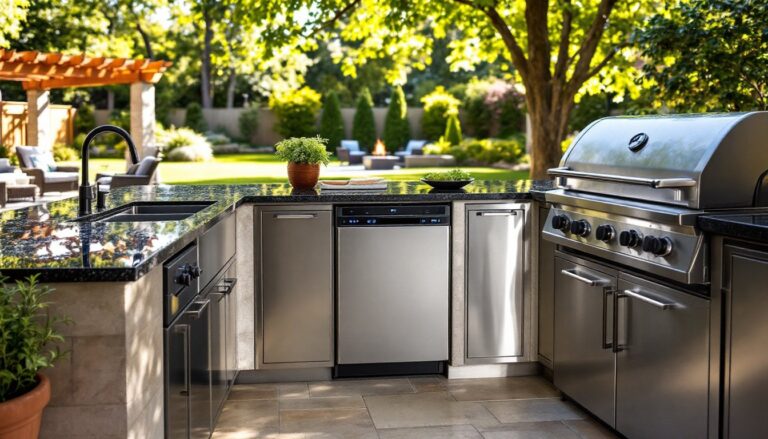
Granite is the workhorse of outdoor countertops. It’s dense, scratch-resistant, and available in hundreds of colors. Standard slab thickness is 3 cm (roughly 1-1/4 inches), sturdy enough for overhangs without additional support up to about 10 inches. Granite handles heat well, you can set a hot pan directly on it without damage.
Granite requires sealing, typically once a year depending on porosity. Test by sprinkling water on the surface: if it beads up, the seal is intact. If it soaks in within a few minutes, reseal. Polished granite is easier to clean than honed finishes but shows scratches more readily.
Marble looks elegant but demands more maintenance. It’s softer than granite (rates around 3-4 on Mohs hardness scale versus granite’s 6-7), so it scratches and etches from acidic foods like lemon juice or vinegar. In freeze-thaw climates, marble can crack if water seeps into the stone and expands. If choosing marble, go with a honed or tumbled finish to disguise inevitable wear, and commit to sealing every few months.
Both granite and marble slabs are heavy, about 18-20 pounds per square foot for 3 cm thickness. Base cabinets or masonry structures must support this weight, plus the load of appliances and users leaning on edges.
Limestone, Travertine, and Sandstone
Limestone offers a soft, matte finish and earthy tones, buff, gray, tan. It’s sedimentary, so more porous than granite. Without proper sealing, limestone stains easily and can erode from acidic spills. It’s better suited for outdoor living space designers who plan covered kitchens rather than fully exposed setups.
Travertine has natural pits and voids that create texture but also trap debris and moisture. Filled and honed travertine works for countertops, but unfilled travertine is better for flooring or decorative accents. It’s популярный for Mediterranean or Tuscan-style outdoor spaces.
Sandstone is the softest of the group (around 3 on Mohs scale). It absorbs water readily and can flake or spall in freeze-thaw regions. Sandstone works in dry, mild climates (think Arizona or Southern California) but struggles in the Midwest or Northeast. It’s budget-friendly, though, often 30-50% less expensive than granite per square foot.
All three require frequent sealing (twice a year minimum) and aren’t ideal near grills where grease splatter is constant. They shine in accent walls, outdoor fireplace surrounds, or bar fronts where exposure is less intense.
How to Choose the Right Stone for Your Climate and Budget
Start with climate. In freeze-thaw zones (USDA Zones 3-6), choose dense, low-porosity stone like granite or soapstone. Porous stone absorbs water, which expands when frozen and cracks the material. Even sealed limestone can fail after a few harsh winters.
In hot, arid climates, lighter-colored stone reflects heat better. Dark granite or basalt can become too hot to touch by midday. Travertine and limestone stay cooler but need aggressive sealing to handle dust and occasional monsoon rains.
Coastal areas demand corrosion-resistant stone. Salt air accelerates deterioration of softer stone and metal fasteners. Granite and quartzite handle salt exposure well. Avoid iron-rich stone (some granites have rust-colored veining from iron oxide) near saltwater, it can stain and weaken.
Budget-wise, expect to pay $40-$80 per square foot installed for granite, including fabrication and edge profiles. Marble runs $60-$120+ depending on rarity and veining. Limestone and sandstone fall between $30-$60 installed. These are 2026 averages: regional costs vary (urban areas and specialty fabricators charge more).
Thickness affects price. 2 cm slabs cost about 20% less than 3 cm but require plywood backing and more support. For outdoor use, 3 cm is worth the investment, it’s more durable and handles cantilevers better.
Consider edge profiles. A simple eased edge costs less than bullnose or ogee profiles. Outdoor kitchens in Pro Fit outdoor designs often use chiseled or rock-face edges for a rugged look, which hides chips better than polished edges.
Finally, factor in long-term maintenance. Cheap sandstone that needs replacement in five years costs more over time than granite that lasts decades.
Installation Tips: DIY vs. Professional Stone Setting
Installing stone countertops is not a beginner DIY project. A 10-foot granite slab weighs 300+ pounds and requires specialized tools: a wet saw with diamond blade, suction cup lifters, and precise leveling equipment. One bad cut ruins a $500+ slab.
That said, homeowners can handle stone veneer or tile installations for vertical surfaces like island sides or backsplashes. Thin stone veneer (about 1 inch thick) weighs far less and installs with masonry adhesive and grout. This is where DIYers save money.
For slab countertops, hire a certified stone fabricator. They template the space (usually with a laser or digital measuring system), cut the stone off-site, and install with proper support and seam placement. Expect to pay $40-$60 per square foot for labor and fabrication, separate from material cost.
Safety warning: Stone dust from cutting contains silica. Always wear an N95 or P100 respirator and cut wet to suppress dust. Prolonged silica exposure causes silicosis, a serious lung disease.
If DIYing stonework around the kitchen (pavers, veneer, or base construction), follow these steps:
-
Prep the base. For countertops, build a frame from pressure-treated 2x4s (actual 1-1/2″ x 3-1/2″) or use concrete block/poured concrete. The base must be level within 1/8 inch over 10 feet and strong enough to support 20+ pounds per square foot.
-
Install a cement backer board (1/2-inch thickness) over wood framing. Screw it down every 8 inches. This provides a stable, moisture-resistant substrate.
-
Apply thinset mortar (medium-bed or large-format type) with a notched trowel. Set tiles or veneer, maintaining consistent spacing.
-
Allow 24-48 hours cure time before grouting. Use a sanded grout for joints wider than 1/8 inch.
-
Seal after grout cures (7-10 days). Use a penetrating sealer, not a topical coating that can peel.
Building codes often require permits for outdoor kitchens with permanent gas or electrical connections. Some jurisdictions also require inspections for structural elements. Check with your local building department before starting.
For built-in barbecues and complex masonry, hire a mason. Poor mortar joints or inadequate footings lead to cracking and safety hazards.
Maintaining and Sealing Your Outdoor Kitchen Stone
Sealing is non-negotiable. Even granite needs it. Use a penetrating (impregnating) sealer, not a surface coating. Penetrating sealers soak into the stone and repel water and oil without changing appearance. Surface sealers can trap moisture underneath and cause spalling.
Apply sealer when stone is clean and dry. Pour a small amount onto the surface, spread with a clean cloth or sponge, and let it absorb for 5-10 minutes. Wipe off excess. Some stones need two coats: check product instructions.
Reseal frequency depends on stone type and exposure. Granite: once a year. Marble, limestone, travertine: twice a year or more. Test by sprinkling water on the stone, if it darkens or soaks in within 10 minutes, it’s time to reseal.
Daily cleaning is simple: wipe with pH-neutral stone cleaner and water. Avoid acidic cleaners (vinegar, lemon-based products) or alkaline degreasers on marble and limestone, they etch the surface. For granite, mild dish soap works fine.
Remove grease stains with a poultice: mix baking soda and water into a paste, spread over the stain, cover with plastic wrap, and let sit 24 hours. The poultice draws oil out of the stone. For rust stains, use a poultice with a commercial rust remover (not for marble).
Winter care: In freeze-thaw climates, cover countertops or ensure water doesn’t pool on surfaces. Standing water that freezes can crack even well-sealed stone. Many homeowners covering outdoor living furniture also cover stone surfaces with breathable tarps.
Inspect grout and mortar joints annually. Cracked grout lets water behind stone, leading to freeze damage or mold. Regrouting is a simple DIY fix, chisel out old grout (use a grout saw or oscillating multi-tool), vacuum debris, and apply fresh grout.
For professional insights on maintaining stone in various home settings, Country Living and Hunker offer seasonal care tips and product recommendations. Stone that’s cleaned and sealed regularly can last the lifetime of the home, making it one of the smartest investments in any outdoor living project.